





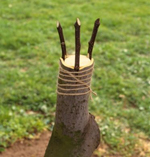
To the average consumer, plant propagation might simply mean growing a new plant from a seed. Experienced gardeners and farmers, however, know that they are numerous ways to propagate, both sexual and asexual. The asexual methods usually create an exact genetic duplicate, or clone of the parent plant. This is usually highly desirable when a gardener finds a plant with superior genetic traits. Plant cloning is almost as old as agriculture itself, and some species of trees originated as plants that were cloned on a mass scale. For example, all Bartlett pear trees have their ancestors in a tree that was first cloned in 1770. Here are the most common methods used by gardeners for cloning plants.
Layering – Layering is a method of cloning plants where roots are encouraged to actually form on the stem before it is removed from the parent plant. Some plants actually use this technique to propagate themselves in nature. In simple layering, the gardener simply bends a low growing stem into the medium, keeping it in place with a stake if necessary. The stem should form roots and start growing as a new plant. In serpentine layering, a very long stem is buried into the medium at intervals. The buried sections will form roots and create several new plants.
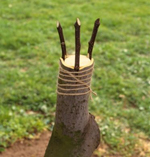 Grafting – Grafting is a method of plant cloning where one plant fuses with another plant. In agriculture, it is usually done with trees. In this technique, the bottom section with the plant roots is referred to as the stock, and the plant that is used for the stems and leaves is called the scion. Many farmers do this when they want to increase the odds of a plant's survival by grafting its top section to another plant with stronger roots. It is also sometimes done to save a tree that may have suffered a damaged trunk or roots.
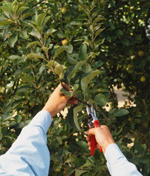 Cutting – Cutting is the most commonly used technique for cloning plants in hydroponics. The gardener simply cuts off a part of the plant, usually a stem or leaf, and plants it into the growing medium. Since this technique requires one to actually detach a part of the plant from the root, and therefore cut off its primary source of moisture, it is imperative to keep a well humidified grow room while cloning plants through cutting. Many gardeners even choose to operate "mist sprays" on their planted cut stems during the one or two weeks that it takes for them to form roots.
Micropropagation – Micropropigation is a very new, very advanced, and very expensive form of plant cloning. In this technique, lab technicians actually make clones of plants using the actual plant tissue. Since this has to be performed in a sterile laboratory environment, and is therefore very costly, it is only performed on plants that are very difficult to propagate asexually. Many believe that Micropropagation may be a way to the future of propagation, as it may have ability to create disease-free plants, as well as plants with other desirable traits, such as those that bigger yields or tastier vegetables.


- 11 years ago
I want to know about the steps of cloning and its house structures…
tnx