





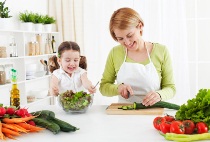
 The advice to eat plenty of vegetable and fruit is one of the most consistent and positive nutrition messages we hear. If we want children to enjoy these foods we need to help them develop a taste for vegetables and fruits from an early age.
Unfortunately one of the most common problems parents face is when their toddler, usually around two to three years old, decides that he or she does not like vegetables.
Here are some simple suggestions to help parents with this dilemma:
Try milder flavoured vegetables
Taste and smell acuity in children can be stronger that that of adults. Therefore vegetables which have a milder smell (for example; beans, corn, peas, carrots, courgettes, pumpkin and kumara) may be preferred over stonger smelling vegetables like broccoli, Brussel spouts and spinach. Overcooking can also intensify flavour and smell so try not to overcook your vegetables.
Serve them as snack or finger food
An easy way to get children to eat more vegetables is to offer them as snack foods. Carrots, lightly cooked cauliflower flowerets, cucumber (peeled and deseeded), celery, tomatoes and frozen peas all make good snacks. For added interest serve them with a dip like yoghurt or tomato salsa. Frozen vegetables such as peas and mini corn cobs are good finger food options. They offer excellent portion control, can often be more palatable for younger children and are easy to prepare in the microwave.
Hide them!
Pasta sauce is a great way of disguising vegetables. Grate carrot and courgettes into a bolognaise sauce or hide under a piece of lasagne.
Don't make a fuss about vegetables being good for you.
It is more likely to be successful encouraging children to eat vegetables because they taste good, than because they are good for you. Children sometimes react negatively towards vegetables because adults make a fuss about them being an important part of a healthy duet.
Don't panic!
Don't panic, if despite all efforts, the toddler is not eating enough vegetables. It is likely to be a temporary phase. Continue to offer small portions of familiar vegetables with meals. Ensure family members are seen eating these vegetables as in doing so will set a good example and encourage the toddler to follow suit. Its important not to make a fuss, as this is likely to only make the situation worse. Another option is to offer plenty of fruit instead. If a toddler is eating fruit they are getting many of the same nutrients they would obtain from vegetables.
You might also like: Pack a healthy lunch box for children


Join the Discussion
Type out your comment here:
You must be logged in to post a comment.