






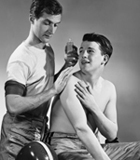
The rotator muscle is the most common cause of shoulder pain. This is a group of four muscles that help to stabilise the shoulder joint by holding the head of the humerus into the socket of the shoulder. If these muscles get damaged it can lead to weakness and instability of the shoulder together with significant shoulder pain.
It is unfortunate that, because the shoulder joint is so complex these muscles are relatively easy to damage, especially once we get past forty. Injuries can range from a mild strain, painful for a couple of days, right through to a full thickness rotator cuff tear that will require surgery.
 Injuries can come about for a variety of reasons. A fall or bad knock to the shoulder can damage the muscles. Sporting activities or work that requires a lot of overhead shoulder movement can cause the tendons to get worn and become inflamed. Sometimes just getting older and the associated change in how we carry our selves can also cause problems. It is no coincidence that the vast majority of rotator injuries fall in two categories, sports injuries and the over forties.
Rotator muscle problems present certain symptoms which are shoulder pain and weakness. The pain will often start as a dull ache that gets worse when the arm is raised to the side or front. If the injury is mild the pain may well go after two or three days rest but if it persists it is important to get a professional diagnosis.
Shoulder pain that persists or worsens may be an indication of a torn rotator cuff or shoulder impingement. Depending on which rotator muscle you have injured it might lead to a shoulder impingement.
The most easily damaged rotator cuff muscle is the supraspinatus tendon. This attaches to the shoulder blade before it runs across the top of the arm and connecting to the head of the humerus. On its way, it passes through a narrow channel of bone under the acromion, situated where the shoulder blade and collar bone meet. Damage to the supraspinatus can cause the tendon to become inflamed. As the muscle swells it becomes too big for the channel and starts to get pinched by the bone. This is the cause of the classic shoulder impingement.
Any further movement will now lead to pain as the tendon gets pushed against the bone. The pain is an indicator that further damage is being done which in turn causes further inflammation. Lifting your arm to the side or front is the movement that puts the most strain on the supraspinatus tendon so it is not surprising that it is this movement that causes the pain. You are now in a vicious circle that can ultimately lead to a badly torn rotator cuff tendon.
The important thing with any rotator cuff injury is to rest the shoulder properly. How much rest required, will depend on how bad the injury is. Rest must involve avoiding any movement that is painful as this is a sign of more damage being caused. The inflammation should be treated with off the shelf anti-inflammatory drugs which need to be taken consistently to get maximum benefit from them. Your doctor can also administer a steroid injection to bring down the inflammation.
 As the inflammation subsides the pain should decrease and movement should also improve. If you want to avoid another injury then now is the time to start exercising the shoulder to strengthen the muscles. Exercise needs to be a shoulder specific therapy programme. This will not involve high resistance exercises or large weights. The aim of the exercises is to not only strengthen the rotator cuff but also to work on the surrounding muscles. They in turn will help to support the rotator cuff as it mends. There are twenty two muscles involved in shoulder movement, so no shortage of volunteers to help the cuff muscles. It is important when exercising to avoid any painful movements.
Rest, followed by treatment of the inflammation, followed by shoulder specific exercise is the accepted treatment for most rotator cuff injuries and is usually tried first. It is usually; only if this conservative treatment does not work, that you would be referred for surgery to free up the shoulder impingement or to surgically repair the tendon.
Even then shoulder specific exercises would again form part of the rehabilitation programme following surgery.
Article by Nick Bynoth

Join the Discussion
Type out your comment here:
You must be logged in to post a comment.