





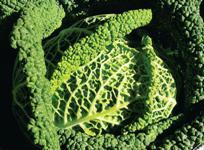
THEY may not be the darlings of cuisine the way that nouveau vegetables, such as bok choi and tat soi are, but the good old-fashioned brassicas, cabbage and kale, are still well worth their place in the winter veggie garden.
They are the epitome of the slow food movement, supplying plenty of seasonal garden-to-table goodness and health-boosting vitamins and minerals in winter. And the colder it gets, the sweeter they taste. It’s no secret to southerners that swedes – another brassica – always taste sweeter after the first frosts. That’s because carbohydrates are converted to sugars in chilly weather. Parsnips too, sweeten up on frosty mornings and freezing them can bring the same result.
If sown or planted now or by early autumn (depending on your region) your tightly furled and curled cabbages will have that characteristic sweet taste when harvested in winter. Among cabbages, I believe the best to grow for winter harvests are the old-fashioned savoy types, with their distinctive crinkly leaves.
 But for a real brassica experience, you might like to try two others, namely kale (Brassica oleraceae) and Tuscan tree cabbage, (Brassica oleraceae botrytis).Tuscan tree cabbage, or cavolo nero as it’s known in Tuscany, is as common to Italians as cabbages are to us.
But, rather than a cabbage for those with just a passing appreciation for brassicas, cavolo nero (cabbage black) is more a green-with-attitude for hardened vegetable fans. But, as with kale, once you’ve developed a taste for the fresh flavour of these dark coloured, robust greens, you’ll be hooked. By contrast, the blanched white flavours of the modern cabbage will soon seem insipid. Both cavolo nero and kale are easy to grow – easier than cabbage – and will reward you with plenty of nutrient-rich, winter leaves for many weeks. But, unlike ordinary cabbages, kale and Tuscan tree cabbage don’t heart up, so can be picked leaf by leaf, over a prolonged period.
And they make a delicious foil for those hearty winter comfort-food dishes, such as lamb shanks and roast beef. Try them steamed to retain the fresh, mineral-packed flavours or stir-fried with onions and garlic for a hard-core brassica experience. Although not widely available from garden centres or seed sellers, seed specialists like King Seeds and Asian-Seed offer both in their catalogues. And as nonhybrid varieties, they will also grow easily from seed you save.
You need to sow them in summer in very cold gardens, late summer in moderately frosty ones and early autumn in the north for harvesting in winter. Like most brassicas, cavolo nero and kale prefer a warm start in late summer or early autumn, again depending on your region, then the cool, moist weather of winter to finally mature and sweeten.
Red delicious
RED cabbages are another ideal cabbage for winter – and they have some extra, health-promoting, anti-oxidants that are only found in ‘red’ vegetables. Apart from colour, classic red cabbages differ from modern green cabbage varieties in having thicker, tougher leaves. These contribute to red cabbages’ excellent storage qualities. Both in the garden in winter (even in very cold and frosty regions) and after harvesting, they keep significantly longer than green cabbages. Despite these differences, red cabbages have the same cultural requirements as= green cabbages and, like them, adapt to a wide range of soils and temperatures. There are red cabbage varieties you can grow year round in many parts of New Zealand, as well as some best planted in late summer for winter harvest (or autumn for spring harvest in warmer gardens).
All are slow-growers, taking up to three months to fully form their very tightly packed, round, drumhead-shaped crops. The colour they develop along the way depends on variety, temperature (cold weather makes them more ‘red’) and pH (acid soil conditions make them more red too). However, even at their most red, they are strictly speaking more a muted maroon or dull reddish purple.
Cooking takes them further away from red – to blue-purple – unless you add some acidic fruit or vinegar when cooking them. Like all cabbages, red cabbage needs a sunny, well-drained site in nutrient-rich soil, so dig in plenty of well-rotted compost and add some blood and bone to the soil before planting. And, as with all brassicas, you should also lime the soil beforehand if this has not been done recently. This, along with diligent drop rotation, helps prevent club root disease.
Red cabbage can be used finely shredded in salads but is especially tasty when cooked the traditional spiced way – long and slow with a little vinegar and honey (or sugar) to taste, a diced carrot, a green apple (with skin) spices, salt and enough water to stop this mix catching on the bottom of the pot. Reheated spiced cabbage leftovers are especially delicious – the cabbage seems to get softer and sweeter treated this way. – Susie Longdell


Join the Discussion
Type out your comment here:
You must be logged in to post a comment.