





The poisonous Milkweed is the primary food source for the Monarch Butterfly pupa, or caterpillar (which is classified as a specialist herbivore). Milkweeds are the only source of nourishment up until they are released from their cocoon (chrysalis) and transformed (or undergo metamorphosis) into a butterfly. After transformation the adults drink water and extract nectar from many kinds of flowers. Monarchs do pollinate flowers, but not nearly as proficiently as bees.
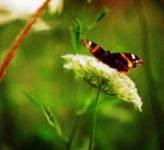
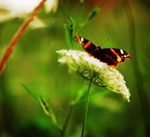 The vast majority of all Monarchs, make their home in agricultural areas that are abundant with the milkweed plants whose leaves provide a safe place to deposit their eggs, and also to feed their offspring. When returning every spring from their winter migration, the butterflies will stop over at the resurging milkweed and flowering plants and continue northward.
The overall milkweed plant family contains over two thousand varieties. The Monarchs lay their eggs on several varieties, but seem to prefer the native, instead of hybrid, varieties. Many kinds of milkweeds contain poisons and are toxic enough to harm livestock and other animals that have not learned through evolution to avoid them.
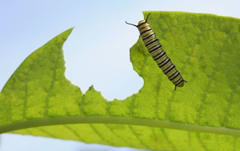 The milkweeds that contain bad tasting and bitter heart poisoning ingredients (cardiac glycosides) are ingested by the Monarch larvae, and remains in the adult butterfly. Birds, and other predators, eating Monarchs containing these poisons, can become very ill, possibly fatally so. The Monarchs themselves (and some other insects) have developed immunity to these poison juices. Interestingly the Viceroy Butterfly, although not containing toxins, has mimicked itself over time to look very similar to the Monarch, thereby deterring many predators.
On the predator side, two species birds, the Black Back Oriole and the Black Headed Grosbeak are not affected by the Monarch’s toxins, and are this butterfly’s main adversary.
Varieties of milkweed are found abundantly, and although the United States government has not labelled the plant as poisonous or noxious, farmers consider the plant a weed and a real nuisance to their livestock and crops. Farmers often apply herbicides to large acreages to kill unwanted vegetation. This has resulted in a very sizable decrease of the Monarch Butterfly’s source of the milkweed plant, especially throughout the mid-western agricultural areas, thereby affecting their summertime migratory behaviour.
Scientists are now able to determine the migratory paths of a Monarch Butterfly. An adult can be analyzed to determine exactly which species of milkweed it fed upon earlier in its caterpillar state.
By Jim Pratt


- 12 years ago
I have fostered monarch caterpillars to pupa to butterfly for many years, and what they eat is not the American milkweed, or our common small milkweed, it is the Swan Plant, Asclepias Physocarpa. Very large caterpillars, almost ready to pupate, can also eat Tweedia and pumpkin, but young ones need the milky juice of the swan plant. They can’t be stopped from demolishing the plant. A caterpillar is simply an eating machine, that is all they do until they make their chrysalis. I have had over 100 chrysalises on my walls and ceilings at the same time, some years. I can’t do it any longer, because to feed them indoors away from predators requires a huge supply of small swan plant branches, and caterpillars are not economical eaters. Predators include wasps, especially paper wasps, praying mantis and shield bugs.