






By Cass Alexander, Alzheimers New Zealand
The beginning of the year is often when people vow to exercise more, catch up with those they haven’t seen for a while and take up a stimulating mental activity.
All of these activities can help prevent dementia.
Alzheimer’s disease and other dementias are often perceived as “old people’s diseases”, but although the strongest risk factor is age (one in a hundred New Zealanders in their sixties and 25% of those over 85 years are likely have to have dementia), more and more people as young at 45 are being diagnosed.
According to the Dementia Economic Impact Report, 40,746 New Zealanders had dementia in 2008, with numbers predicted to just about double every 20 years. By 2050, 146,699 New Zealanders are expected to have dementia.
Dementia is a progressive, neurological disease which changes personality, memory and cognitive function. Alzheimer’s disease is the most common form (50-70%). Less common forms include vascular dementia, where brain cells die or malfunction due to deprivation of oxygen caused by a blockage in the vascular system, Pick’s disease, caused by damage to frontal and temporal lobes and dementia with Lewy bodies, caused by tiny protein deposits found in nerve cells.
Dementia is indiscriminate to intellectual ability or ethnicity and there is no cure, but the sooner you start working on your body and your brain, the more you can reduce your chances of getting it.
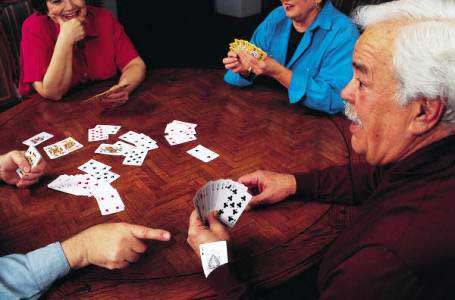
Caption: Playing card game like bridge can reduce your chances of developing dementia
Exercising regularly is the first step
A study conducted by the University of Melbourne in 2008 found participants who completed three 50-minute sessions of moderate exercise, such as walking, over a 24-week period, improved their cognitive function compare to those who didn’t. What’s more, these participants continued to achieve a high level of cognitive function one year after they completed the programme!
A more recent study from the Mayo Clinic Study of Aging found middle-aged people who exercise moderately were 39% less likely to suffer from cognitive impairment. The even better news? In this particular study, the highest results in risk reduction were made by participants who engaged in moderate exercise, such as brisk walking, aerobics, yoga, strength training or swimming, as opposed to vigorous exercise, such as jogging! Researchers also took into account the fact that people who exercise are also prone to eating well and regularly checking their health.
Exercise also helps prevent heart disease, diabetes and depression. The absence of these ‘ills’ are both good for general health and well-being and helpful in the fight against dementia: a US study from last year said people under 55 with diabetes were three times more likely to develop dementia, while those with high blood pressure were 60% more likely.
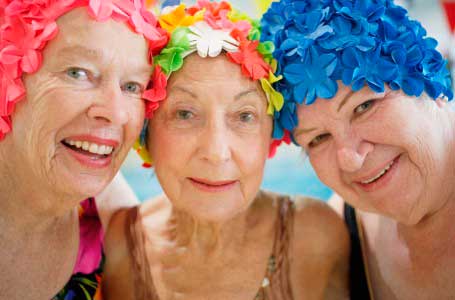
Caption: Why not organise regular exercise sessions with friends?
You can never have too many friends
Good news for online socialites, or those whose favourite thing to do is to catch up with friends over a latte: maintaining and creating relationships reduces isolation and increases intellectual stimulation, both factors in lessening risk of dementia.
A recently-published Harvard School of Public Health study discovered older people with an active social life have less risk of developing memory problems. Data was gathered from 1998 to 2004 from participants aged 50-plus. Each year of the study participants were asked to recall a list of nouns after a five-minute delay. Their degree of “socialness” was measured in martial status, contact with parents, children and neighbours and involvement in volunteer activities. Participants with the highest level of social integration had the slowest memory decline rate. Another study, based at the Växjö University and the Karolinska Institute in Sweden, discovered those living with a partner or spouse in middle age were 50% less at risk of being diagnosed with dementia than those living by themselves. The greatest risk for dementia was in people who lost their partner before middle age. Those who had been married then divorced and remained single, increased their risk of developing dementia three-fold.
Borrow your grandchildren’s Wii or DS Lite, grab the newspaper, take up a class
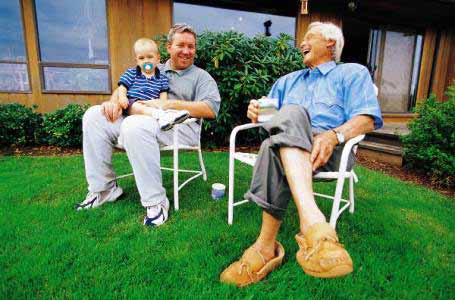
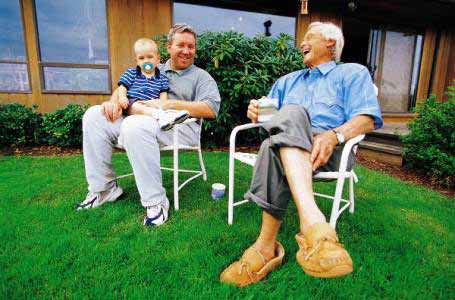
Caption: Keeping in touch with friends and family reduces isolation and increases intellectual stimulation
Regardless of your age, you can train your brain.
Learning a new skill or language, playing card games or playing “brain games” such as crosswords, Sudoku or doing brain teasers on electronic games like Dr Kawashima's Brain Training: How Old Is Your Brain? will also lessen your risk of dementia.
In a study last year, researchers at John Hopkins University studied the brains of 38 Catholic nuns and found those with good language skills early in life were less likely to have memory problems, even in those who died with dementia.
Dr Chris Perkins, old age psychiatrist and member of Alzheimers New Zealand’s scientific advisory board says working on your brain, body and relationships, as well as helping to reduce dementia, “can be fun and might prevent depression as well.”
“But it is important not to know that doing all these things is not a guarantee you won’t get dementia or that if you DO get dementia you have yourself to blame for not trying hard enough!” she says.
Alzheimer’s Australia’s brochure, Mind your mind: how to keep your brain healthy and reduce your risk of dementia is a useful resource for dementia prevention tips. It is available here.
Contact Us
Alzheimers New Zealand has 23 local organisations which provide support, care, education and information. To be in touch, please call 0800 004 001 or go to www.alzheimers.org.nz. For general enquiries about dementia and prevention, please contact nationaloffice@alzheimers.org.nz.

Join the Discussion
Type out your comment here:
You must be logged in to post a comment.